



• Meanwhile in markets, with Bund yields loitering a hair below their multi-year or multi-decade highs, let us have a look at debt sustainability in the Euro Area. Better said: debt unsustainability;
• For the record, at the end of the morning I clock the 10y Bund at 3.16 and the 30y at 3.67. For the week, yields are up a smidgen. French bonds are underperforming, which is quite common these days. Based on generic pricing, the 10y Bund spread has edged up to 82bps. Crawling away from Italy’s 77bps. Last decade’s debt sinners – Portugal and Spain – trade tighter than Belgium but wider than Austria. And in line with Finland in the case of Portugal. That will likely change. In favor of the South;
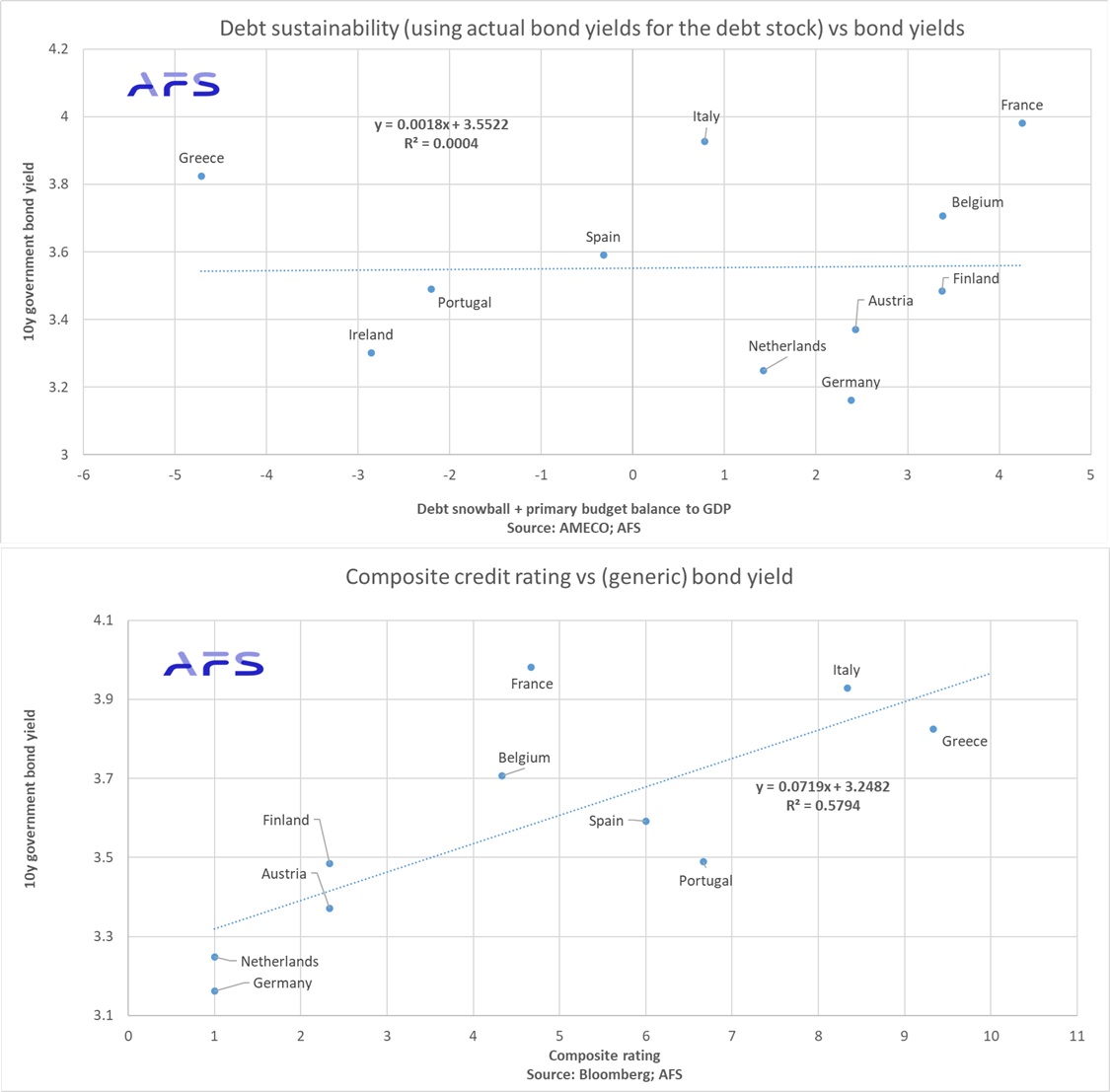
• In the dot plot chart with the regression line, which has a terrible R2, I plotted the 10y sovereign yield against the annual change in the debt-to-GDP ratio. The change in the debt ratio is simply a function of the differential between the interest rate and nominal GDP growth and the primary budget balance. To spice things up, I’ve used the 10y yield as a proxy for the interest rate on the existing stock of government debt. As a theoretical exercise for what’s going to happen as low coupon existing debt is gradually being rolled over at current market interest rates. Not to mention net new issuance;
• If you’re an old-timer (like yours truly), you will immediately notice that last decade’s ‘frugal’ northern member states all have rising debt ratios at current market interest rates and given current primary deficits as estimated by the EU Commission. So, everyone to the right of Spain must either get lucky with lower interest rates and/or higher inflation and real growth (good luck with that!) or cut the deficit. Yes, austerity, that dirty word;
• Italy’s debt ratio will rise at current market interest rates (it’s falling slowly when I use the actual coupon payments). France, Belgium, and Finland are in real trouble. But also look at Germany. This is not the Germany from back in the days: the paragon of fiscal virtue. These days, the fiscal saints are Greece (benefitting from sustained primary surpluses and bailout debt on friendly terms), Ireland, and Portugal;
• Based on the credit rating, Portugal trades very tight. Actually, like a double A rated sovereign. The other outlier is France, which trades as a triple B sovereign. Germany also trades tight – that’s the Bund premium that I expect to disappear but doesn’t. In any case, with rapid declines in debt ratios, Portuguese and Greek bonds should continue to do well. That Bund premium should be eroded, but it isn’t happening;
• Turning to some broad market commentary, European equities are up moderately for the week, with the Stoxx 50 notching up a five-day gain of half a percent and hitting an ATH to boot. S&P 500 futures are flattish while UST yields have come off the lows. Brent crude futures prices have edged higher before falling back somewhat and trading at $87.8 at pixel time. The yen has strengthened this session, with USDJPY in the low 159s. On no news, by the way;
• Looking ahead, eyes will be on US retail sales this afternoon. Next week’s calendar is fittingly short for the August holiday period. Key events include Wednesday’s FOMC minutes and the August PMIs on Friday.

.png)